When to Call for Professional Tree Removal in DeLand
Living in DeLand, Florida, means living among oak canopies, pines, and palms. That shade is a blessing in the summer heat, but it comes with responsibility. Trees grow old, storms roll in, and limbs get heavy. Knowing when a job calls for professional tree removal is a skill most homeowners only learn the hard way. I have seen too many people grab a chainsaw and a ladder on a Saturday morning, only to end up with a ruined fence, a damaged roof, or worse, an injury. That is why understanding what professional tree removal actually involves can save you money, time, and danger.
The Difference Between a Weekend Project and a Real Job
A lot of tree work looks simple from the ground. You see a dead branch, you think, "I can cut that down." And sometimes you can. But the moment a tree is taller than your house, or leaning toward a structure, or tangled in power lines, the math changes. Professional tree removal is not just about having a bigger saw. It is about understanding leverage, decay patterns, and drop zones. I once watched a neighbor try to fell a thirty-foot water oak in his backyard. He tied a rope to his truck and started cutting. The tree split halfway up and hung there, suspended by a strip of bark. It took a crew with a bucket truck and a rigging system three hours to bring it down safely. That is the kind of situation that separates a DIY attempt from a job handled by people who do this every day.
When you call a service like the one offered in DeLand, you are paying for more than muscle. You are paying for a tree risk assessment, knowledge of local city ordinance, and experience with unpredictable wood. A professional crew will walk the property, look at the soil, check for cracks in the trunk, and decide whether the tree can be felled in one piece or needs to be dismantled in sections. That assessment alone is worth the call.
What Professional Tree Removal Includes
A full-service job typically starts with a site visit. An arborist report might be written if the tree is large or protected under local rules. In DeLand, certain native species are regulated, and cutting them without a permit can lead to fines. A good company knows the ins and outs of the city ordinance. They will pull the right permits and notify the right departments before a single branch falls.
Once the paperwork is clear, the equipment comes out. A typical crew will bring a bucket truck to reach high limbs, a wood chipper to process brush on site, and a stump grinder to take the leftover base down to below grade level. For large removals, a crane service might be brought in, especially if the tree is close to a house or a property line. The crane lifts heavy sections clear of anything below, which protects the landscape preservation you have worked to maintain. Without that kind of gear, you risk tearing up your lawn, smashing your patio, or worse, hitting a utility line.
Utility line clearance is a whole separate specialty. If a tree is touching or threatening a power line, do not touch it. Ever. Power companies have their own crews, and they have strict rules. But sometimes the tree is on your side of the meter and needs professional tree removal before it causes an outage or a fire. A qualified crew will coordinate with the utility company and work around live lines using insulated tools and careful rigging.
The Role of Standards and Safety
Tree work is one of the most dangerous jobs in the United States. OSHA keeps a close watch on the industry for good reason. Falls, struck-bys, and electrocutions happen every year. A reputable company follows OSHA guidelines for climbing, cutting, and equipment use. They also follow standards set by organizations like the International Society of Arboriculture and the Tree Care Industry Association. These groups provide best practices for pruning, removal, and risk assessment. When you hire someone who follows those standards, you are hiring a professional who treats safety as a non-negotiable part of the job.
I remember a job in a tight backyard in DeLand where a massive live oak had a split trunk. The homeowner had been told by a general handyman that he could just trim the bad side and leave the rest. But the International Society of Arboriculture guidelines are clear on codominant stems with included bark. That tree needed to come down, not be trimmed. The crew used cable bracing to stabilize one section while they dismantled the other. Then they removed the whole thing over the course of a day. No damage to the fence, no injury, no surprises. That is what you get when you hire people who train to a standard.
When Emergency Strikes
Storms hit central Florida hard. Lightning, wind, and rain can turn a healthy tree into a hazard in minutes. Emergency tree removal is a service that most homeowners hope they never need, but everyone should know about. After a storm, a tree may be leaning on a house, blocking a driveway, or hanging by a thread. That is not the time to shop for the cheapest bid. You need a crew that can respond fast, work in dangerous conditions, and get your property stable again.
During a recent hurricane season, a friend in DeLand had a large pine come down across his garage. The tree was still under tension, and the broken trunk was twisted. A local crew with a crane service arrived within two hours. They rigged a line from the crane to the top of the broken tree, lifted it clear of the roof, and then lowered it to the ground in pieces. They used a stump grinder afterward to remove the base so he could start repairs. That kind of coordination does not happen by luck. It comes from experience and the right equipment.
Beyond Removal: Lot Clearing and Landscape Preservation
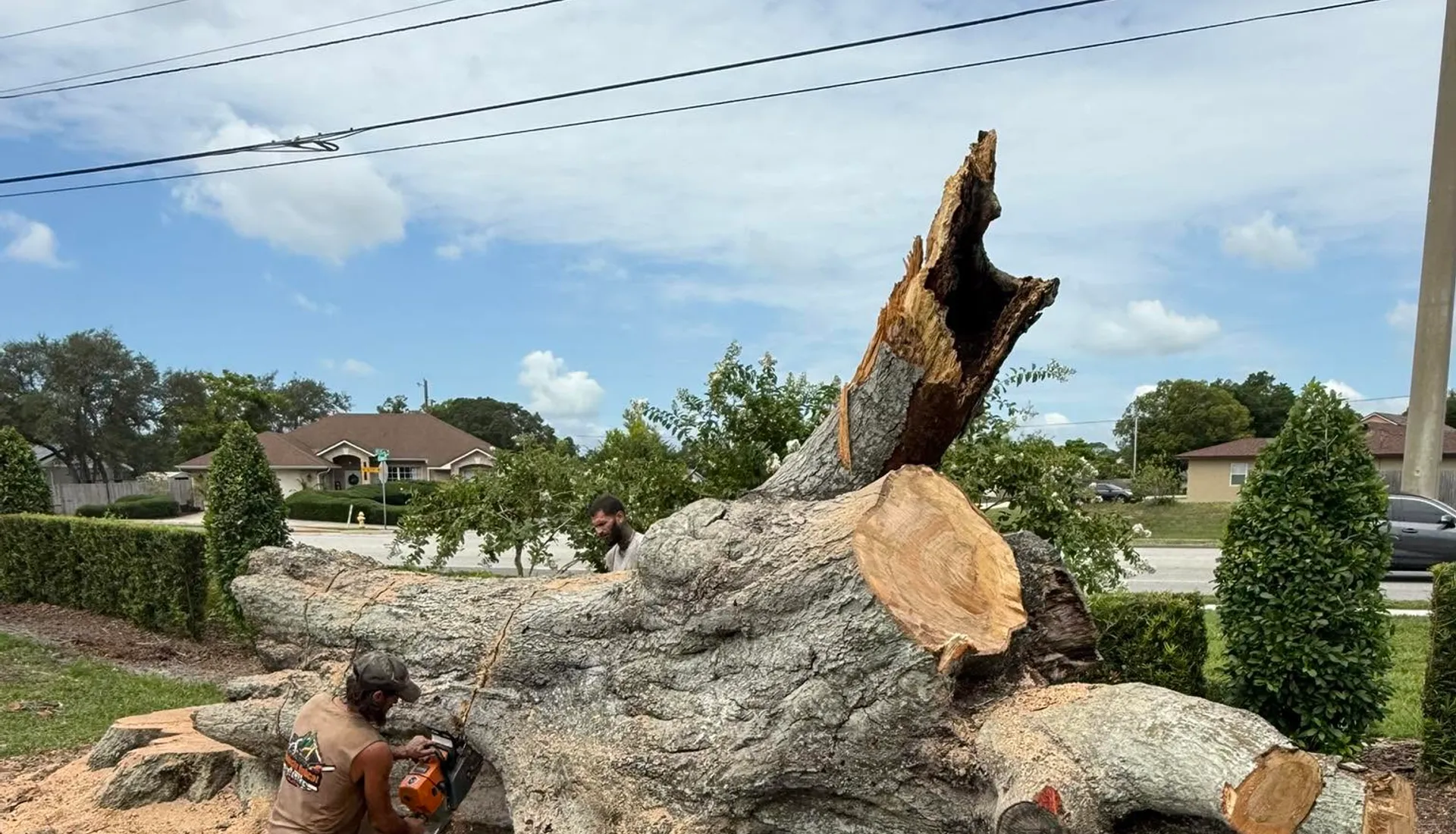
Sometimes a property needs more than one tree taken down. Lot clearing for a new build, a fence line, or just to open up a view requires a different approach. You want to remove what is necessary but preserve the trees that add value and shade. A good arborist will walk the lot with you and mark which trees should stay. They will also consider the impact on surrounding landscape. Running heavy equipment over roots can kill a tree you want to keep. A crew that understands landscape preservation will use mats, planks, and careful paths to minimize soil compaction and root damage.
Property lines are another tricky area. If a tree straddles the line between you and your neighbor, the rules vary. In Florida, the trunk location usually determines ownership, but branches and roots can cross. Professional tree removal experts know how to handle boundary issues without starting a feud. They will advise you on communication and may recommend getting a survey if the line is unclear. No one wants a lawsuit over a tree.
The Tools of the Trade
If you have ever watched a crew work, the first thing you notice is the variety of tools. A chainsaw is the obvious one, but professionals use different sizes and types for different cuts. A top-handled saw for climbing, a larger saw for the ground, and sometimes a specialized saw for flush cuts near a house. The bucket truck gets the climber up high safely. The wood chipper turns branches into mulch in seconds. The stump grinder chews through what is left below grade. And for the heavy lifting, a crane service with a trained operator can lift sections that weigh thousands of pounds.
Rigging is the invisible art. Ropes, pulleys, and friction devices let a climber control a falling branch from above. They can lower a heavy limb past a roof or through a gap in the trees. Without rigging, many removals would be impossible without damaging the property. It is one of those skills that looks simple on YouTube but takes years to learn safely.
How to Choose a Tree Service
Not everyone with a chainsaw and a truck is qualified. Look for credentials. Ask if they follow the standards of the International Society of Arboriculture or the Tree Care Industry Association. Ask for proof of insurance and ask if they carry workers' compensation. In Florida, uninsured tree services are common, and if someone gets hurt on your property, you could be liable. Also, ask about their approach to tree risk assessment. A good company will not just quote a price over the phone. They will want to see the tree.
Check for a physical address and a local phone number. If the business is based in DeLand, they will know the local city ordinance and the common tree species in the area. They will also have relationships with the utility company and the permit office. That local knowledge matters when you need emergency tree removal fast.
Finally, do not be afraid to ask for a detailed estimate. A professional will break down the cost of labor, equipment, disposal, and stump work. If the estimate is vague or unusually low, that is a red flag. Cheap tree work often comes with hidden costs, like damage to your property or a half-finished job.
Final Thoughts
Living with trees means accepting that some of them will eventually need to come down. When that day comes, professional tree removal is not an expense to avoid. It is an investment in safety, property value, and peace of mind. Whether you need a single limb removed after a storm, a full lot cleared for construction, or a routine removal of a declining oak, the right crew makes all the difference. Do your homework, ask the right questions, and let the professionals handle the heavy lifting.